RV Slide-Out Not Working? Common Causes and Repair Options
When an RV slide-out stops working, the problem can quickly disrupt your plans. The room may not move at all, stop halfway, move unevenly, or make unusual grinding or clicking noises. In some cases, you may hear the motor running even though the slide-out does not move.
A failed motor is one possible cause, but it is far from the only one. Low voltage, electrical problems, worn gears or drive components, controller problems, alignment issues, and mechanical binding can create similar symptoms.
RV slide-outs also use several different types of drive systems, including electric rack-and-pinion, in-wall, cable-driven, and hydraulic systems. The cause of a problem—and the appropriate repair—depends partly on which system your RV uses.
Knowing the common causes can help determine when basic troubleshooting is appropriate and when professional RV slide-out motor repair is needed.
Signs Your RV Slide-Out May Have a Problem
Motor problems and other slide-out failures can appear in several ways. Watch for:
- No movement: The slide-out does not respond when you activate the switch. This may indicate a power-supply problem, fuse or circuit-breaker issue, switch or controller failure, wiring problem, motor failure, or another mechanical or electrical fault.
- Slow operation: The room moves but takes noticeably longer than usual. Low voltage, excessive resistance, mechanical binding, or a motor or drive-system problem may be involved.
- Motor runs but the slide-out does not move: Depending on the type of slide system, this may indicate damaged gears, drive components, cables, or another failed mechanical connection between the motor and slide-out.
- Clicking or grinding: Unusual sounds can indicate worn gears, mechanical binding, damaged drive components, motor problems, or other issues.
- Stopping halfway: The slide-out begins moving but stops before reaching its fully extended or retracted position.
- One-direction operation: The slide-out extends but will not retract, or retracts but will not extend. Electrical controls, switches, wiring, motors, or other system components may be responsible.
- Uneven movement: One side of the slide-out moves faster than the other, or one side moves while the other does not. Depending on the slide system, this can indicate synchronization, motor, gear, cable, alignment, or mechanical problems.
These symptoms should be investigated before repeatedly operating the slide-out. Continuing to operate a system that is grinding, binding, moving unevenly, or repeatedly stopping can place additional stress on motors, gears, rails, cables, and other drive components.
Why Is My RV Slide-Out Not Working?
An RV slide-out can stop working for many reasons other than a failed motor.
Common possibilities include:
- Low battery voltage or inadequate 12-volt power
- A blown fuse
- A tripped or faulty circuit breaker
- A faulty control switch
- A slide-out controller or control-module problem
- Damaged, loose, or corroded wiring and electrical connections
- Motor synchronization problems on applicable slide systems
- Worn or stripped gears
- Damaged cables or other drive components
- Slide-out misalignment
- Mechanical binding
- Dirt, debris, or obstructions around moving components
- Water intrusion or corrosion
- Motor failure
Low voltage deserves particular attention. A battery may have enough power to operate lights and other accessories but still experience excessive voltage drop when a slide-out motor is placed under load. This can cause slow operation, stopping, or failure to move.
Because several different problems can create similar symptoms, replacing the slide-out motor without properly diagnosing the system can result in unnecessary expense.
Why Does My RV Slide-Out Stop Halfway?
A slide-out that starts moving and then stops may have an electrical or mechanical problem.
Low voltage can cause the motor to struggle as the room moves. Mechanical binding, misalignment, damaged drive components, controller problems, synchronization issues, or excessive resistance can also cause the slide to stop before completing its travel.
If the slide-out repeatedly stops in approximately the same position, there may be a mechanical obstruction, alignment problem, or excessive resistance at that point in its travel.
Repeatedly pressing the switch without identifying the cause can place additional stress on the slide-out system.
Different RV Slide-Out Systems Require Different Repairs
Not every RV slide-out operates the same way, so troubleshooting and repair procedures can vary considerably.
Electric rack-and-pinion systems use an electric motor and mechanical drive components to move the room. Problems may involve the motor, gears, electrical supply, alignment, or drive mechanism.
In-wall slide systems may use separate motors and controllers that must operate together. Uneven movement can sometimes involve synchronization, wiring, controller, motor, or mechanical issues.
Cable-driven systems use cables and related drive components to extend and retract the room. Cable adjustment, wear, drive components, and alignment can affect operation.
Hydraulic slide-outs require different troubleshooting. A problem may involve the electric pump motor, electrical supply, hydraulic fluid level, valves, hoses, cylinders, leaks, or other hydraulic components rather than the slide mechanism itself.
Identifying the type of slide-out system is an important first step in determining the correct diagnostic and repair procedure.
What You Can Safely Check
Before arranging service, there are several basic checks an RV owner can make.
Start by confirming that the RV has adequate electrical power. Check the appropriate fuse and circuit breaker, and look for obvious damage or loose connections in accessible wiring.
Also look for visible objects or debris that could interfere with the slide-out's movement.
Your RV or slide-system manufacturer's manual may provide model-specific troubleshooting information, including procedures for resetting controllers or dealing with synchronization problems on certain systems.
Do not force a slide-out manually. Some systems have a manufacturer-specified emergency retraction procedure, but the procedure varies considerably by slide-out design. Follow the RV or slide-system manufacturer's instructions rather than attempting to move the room by force.
A slide-out is a large, heavy moving assembly. Keep hands, clothing, tools, and other objects away from gears, rails, cables, and other moving components while the system is being operated.
If you are unfamiliar with RV electrical, hydraulic, or mechanical systems, professional diagnosis is the safer approach.
Water Damage Can Affect Slide-Out Operation
Water intrusion can cause more than interior damage to an RV.
Depending on the location and slide-out design, moisture can affect electrical connectors, wiring, motors, controllers, gears, rails, and other components. Corrosion can create electrical resistance or interfere with mechanical operation.
If a slide-out problem occurs along with evidence of water intrusion, staining, corrosion, or damaged seals, the source of the moisture should also be investigated.
When Professional RV Slide-Out Repair Is Needed
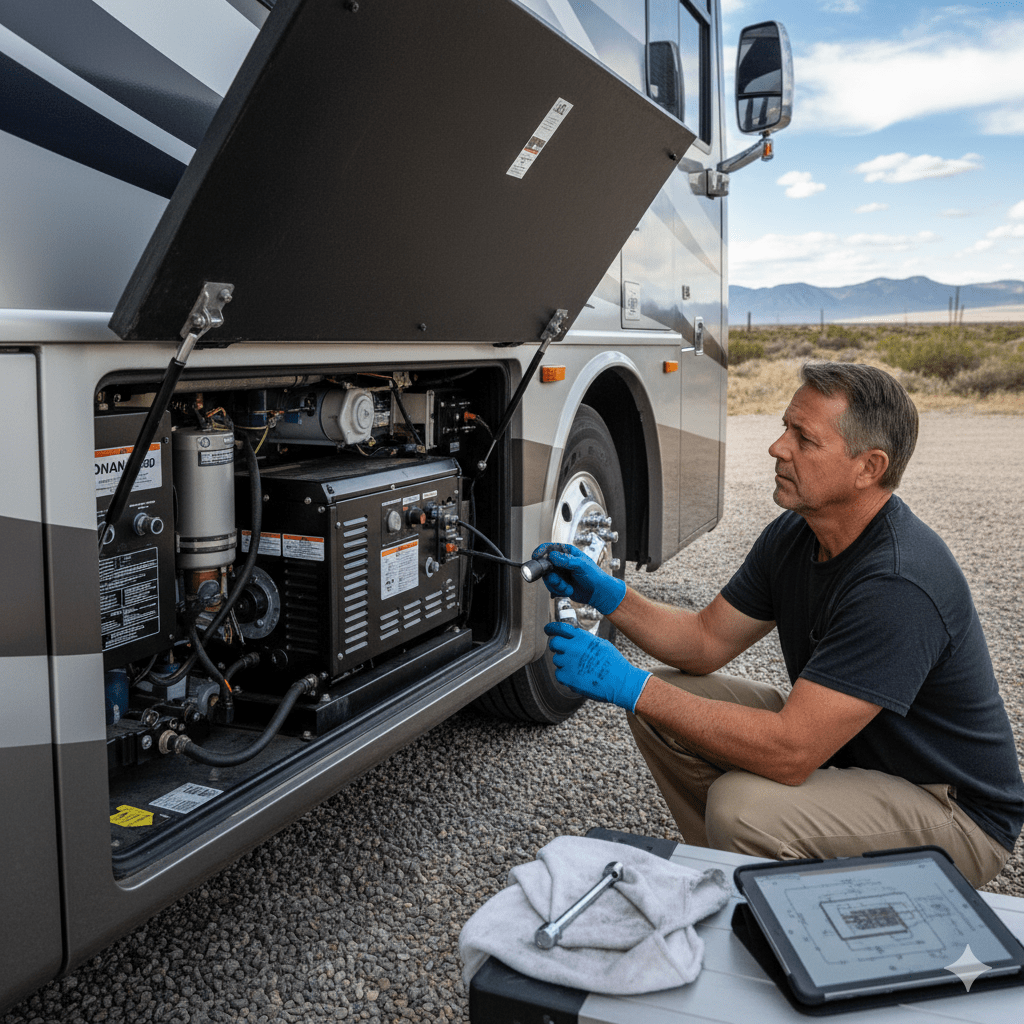
If basic checks do not resolve the problem, a technician can test the electrical and mechanical systems to determine what is actually causing the failure.
Depending on the slide-out design, diagnosis may include checking battery voltage under load, fuses and circuit breakers, switches, controllers, wiring, motors, gears, cables, drive mechanisms, hydraulic components, alignment, and signs of mechanical binding or water damage.
Proper diagnosis is particularly important before replacing a slide-out motor. If the underlying problem is low voltage, misalignment, binding, a damaged drive component, or a controller problem, replacing the motor alone may not solve the problem.
A professional inspection with Mainline RV & Truck Service can help identify the cause and determine the appropriate repair.
Mainline also provides a broad range of RV repair and maintenance services beyond slide-out systems. For motorhome owners experiencing handling, steering, suspension, alignment, or ride-quality concerns, we offer Road Performance Assessments (RPAs), computerized RV wheel alignment, and related RV chassis services.
Get Professional RV Slide-Out Repair with Mainline RV & Truck Service
An RV slide-out that will not move, stops halfway, moves unevenly, or makes grinding or clicking noises should not be ignored.
Continuing to operate a slide-out that is binding or malfunctioning can place additional stress on motors, gears, cables, rails, and other components.
Identifying the underlying problem early can help prevent a relatively small problem from becoming a more extensive repair.
Whether the problem involves the motor, electrical system, controller, drive mechanism, alignment, or another component, proper diagnosis can help determine the appropriate repair instead of replacing parts unnecessarily.
For professional RV slide-out motor repair, inspection, and related RV services, contact us to schedule service.
Contact Us