Alignment vs. Suspension as Causes of Irregular Tire Wear
Irregular tire wear is often the first visible sign that something underneath a heavy-duty truck is no longer operating as it should. A slight pull in the steering wheel or a vibration at highway speed can quickly turn into accelerated tread loss and higher operating costs if left unchecked.
Let’s explore how to distinguish alignment-related wear from suspension problems and when to schedule heavy-duty truck service to prevent further damage.
Why Irregular Tire Wear Should Never Be Ignored
Uneven tread wear affects braking stability, steering precision, and load control. On a fully loaded truck, reduced tire contact with the road surface can increase stopping distances and make handling less predictable, particularly in wet or icy conditions.
There is also a measurable cost impact. Irregular wear increases rolling resistance, which forces the engine to use more fuel to maintain consistent speed. Over time, that added resistance reduces fuel efficiency and shortens tire life, making early correction through heavy-duty truck service essential.
Primary Causes of Accelerated Tread Loss
Accelerated tread loss typically results from incorrect wheel alignment or weakened suspension components. Alignment determines the angles at which tires meet the road, while the suspension system controls how the axle moves under load and absorbs road shock.
When alignment angles fall outside manufacturer specifications, the tire scrubs across the pavement instead of rolling cleanly. When suspension components lose stability, the tire’s contact patch becomes inconsistent. Both conditions remove tread faster than normal operation would.
Operating conditions can intensify these mechanical issues. Uneven cargo weight, overloading, or off-center placement shifts pressure across the tires and accelerates wear on specific sections. Rough road surfaces and sustained highway speeds place additional stress on suspension components, increasing the likelihood that minor alignment deviations or worn parts will show up in the tread pattern.
Common Types of Irregular Tire Wear Patterns
Tread patterns provide strong diagnostic clues. Each pattern forms differently depending on how the tire interacts with the road surface. Common examples include:
- Feathering: A directional roughness across tread ribs caused by improper toe settings.
- Cupping: Repeating dips or scalloped sections along the tread surface, typically linked to tire imbalance or poor damping control.
- Shoulder wear: Accelerated tread loss on one edge, often associated with camber imbalance.
Recognizing the pattern early allows technicians at a commercial truck shop to narrow the focus before beginning repairs.
Specific Markers of Poor Wheel Alignment
Alignment issues tend to produce consistent and predictable tread changes. When toe or camber angles are incorrect, the wear usually follows a steady pattern across the tire surface rather than appearing in isolated patches.
Drivers often report subtle steering symptoms alongside the tread changes. A truck that drifts slightly on straight roads or requires constant correction may be operating with alignment angles outside specification. Correcting those measurements during heavy-duty truck service restores proper tracking and reduces unnecessary drag.
Identifying Suspension-Related Wear Patterns
Suspension-related wear is less uniform and more dynamic. Instead of steady rib or shoulder wear, the tread may show intermittent low spots that develop as the tire loses consistent contact with the pavement. This occurs because worn shocks, bushings, or pivot components allow the wheel assembly to move vertically or laterally, causing the tire to bounce or shift rather than maintain steady pressure against the road.
Handling feedback often helps confirm the diagnosis. Increased vibration at highway speeds or instability over uneven surfaces can indicate that shocks, linkage components, or steering pivots are no longer controlling movement effectively.
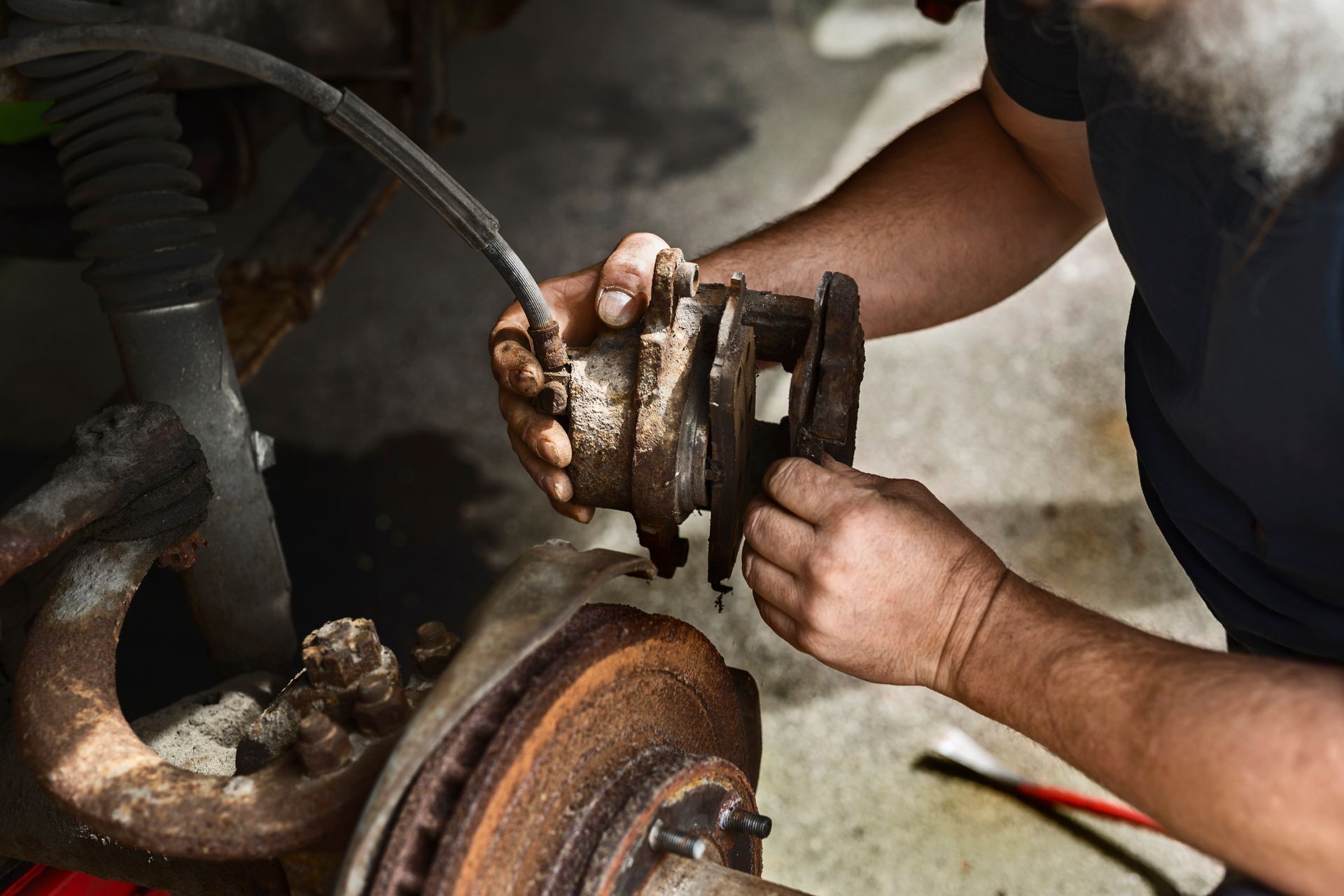
On steer axles, worn kingpins or deteriorated bushings can allow excess movement at the wheel assembly. Even slight play changes how the tire sits under load, gradually altering tread wear and contributing to the patterns often seen with suspension problems. During a heavy-duty truck service, technicians inspect these pivot points carefully to prevent continued tire damage and protect steering performance.
Comparing Alignment Symptoms and Suspension Failures
When irregular wear appears, distinguishing between alignment and suspension causes becomes critical. Alignment problems are often directional and consistent, while suspension concerns produce instability that changes with speed and road surface.
The reason lies in how each system influences tire contact. Alignment sets fixed angles, so when those angles are incorrect, the tire scrubs the pavement in the same way on every rotation, leading to steady and uniform wear. Suspension components control movement. When they weaken, the tire’s contact pressure varies as the truck moves, creating uneven or intermittent tread patterns.
Technicians look for these distinctions during an inspection:
- Steering pull or off-center steering wheel linked to alignment angles
- Uniform rib or shoulder wear that progresses steadily
- Vibration or instability that worsens over bumps, suggesting suspension control issues
- Intermittent tread depressions that indicate loss of damping
Because suspension wear can gradually influence alignment measurements, a full evaluation at a commercial truck shop is necessary to isolate the true cause.
How to Diagnose the Cause of Uneven Tire Wear
Diagnosis begins with tread depth measurement across multiple points on each tire. Comparing inner and outer shoulders reveals whether wear is consistent or localized.
Technicians then verify alignment readings using calibrated equipment and inspect suspension components for excess movement. Kingpin and bushing inspections are especially important on high-mileage units, as wear in these areas can alter steering geometry without obvious warning signs.
When to Seek Professional Inspection
Professional inspection should be scheduled as soon as irregular wear appears rather than waiting for severe tread loss. Early heavy-duty truck service may involve a simple alignment adjustment instead of major component replacement.
Drivers and fleet managers should seek evaluation if they notice steering pull, increased vibration, uneven shoulder wear, or repeated premature tire replacement on the same axle. Prompt semi-truck repair reduces downtime and protects long-term operating costs.
Contact Mainline RV & Truck Service for a Heavy-Duty Truck Service
Irregular tire wear is a warning sign that should never be ignored. Whether the cause is alignment deviation or suspension wear, identifying the issue early improves safety, fuel efficiency, and tire longevity.
At Mainline RV & Truck Service, we provide comprehensive heavy-duty truck service, including precision alignment, steering diagnostics, and suspension inspections. Our experienced commercial truck shop handles everything from kingpin evaluations to complete semi-truck repair, helping keep your equipment reliable and road-ready. Call us at 440-439-7777 or fill out our online contact form to schedule your service.
Contact Us