How to Find a Great RV Repair Shop in Cleveland
Traveling with your recreational vehicle (RV) will bring thrilling adventures, but also, at some point, the need for a reliable repair shop. As every road trip enthusiast will tell you, having a dependable place for repairs and maintenance is as crucial as the journey itself. If you're wondering where to start looking for that perfect RV repair shop in Cleveland, here's a guide just for you.
Finding a Great RV Repair Shop in Cleveland: Deep Dive
Venturing out with your RV is all about the promise of new experiences. Yet, as with all things mechanical, the need for repairs and maintenance will arise. When in Cleveland, a city of rich culture and diversity, how do you ensure you're entrusting your RV to the best hands? Let's further our exploration into finding that perfect RV repair shop.
1 - Local Shops Over Large Dealers
Choosing a local repair shop might seem counterintuitive when big-name RV dealers are just around the corner. However,
local shops can offer a more personalized touch. Technicians at smaller outfits take the time to understand your RV’s unique quirks and your specific needs. Additionally, they're well-versed with Cleveland's roads and climate, which can be a plus when diagnosing local wear and tear issues. Moreover, local shops often prioritize building lasting relationships with their clients, ensuring you're more than just a number to them. And when it comes to pricing, they might have the edge too, as they typically have lower overhead costs than sprawling dealerships.
2 - Turn to the RV community
There are plenty of RV and motorhome enthusiasts across Ohio. Chances are, you already know some. This is going to be one of the best possible ways to find good repair shops. Ask friends directly, or post on social media asking for recommendations. You're almost certain to get some great suggestions.
Or, at least, people will probably be happy to let you know which places to avoid if they had a bad experience there.
3 - Look up online reviews
Looking for more opinions? Online review sites are another great option. Plenty of sources such as Yelp and Google Local allow people across Ohio to report on their experiences with RV shops. Generally speaking, you want a place with at least 4-out-of-5 star reviews. Anything less than that suggests something is wrong. In today's digital age, reviews and testimonials are the new word-of-mouth. Delve into online platforms, forums, and websites where RV enthusiasts share their experiences. Listen to the voices of fellow RV owners. Were they satisfied with the service they received? Did the repair shop live up to its promises? Genuine feedback from real customers can provide invaluable insights.
Also, be sure to actually read the reviews; don't just skim the ratings. You'll pick up more valuable information that way. And you'll also have an easier time spotting fake reviews, which are unfortunately common these days.
4 - You want a well-established business
The longer an RV repair shop has been in business, the better the chances they’re treating their customers right. Changes are very good that shop has a lot of very happy customers who return whenever they need RV repairs and maintenance.
5 - Find out How Long They Have Been in Business
Vehicle repair shops come and go, and also frequently change hands. It's an industry where it's easy for a business to fail, so a lot of companies in business are relatively new.
All other things being equal,
the longer an RV repair shop has been in business, the more trustworthy they're likely to be. If you're looking for a deciding factor between two or more shops you're considering, go with whichever has the longest history. That's the safe bet.
6 - Look for shops that specialize in RVs
A lot of general-purpose auto/truck repair shops will say they can handle coaches and motorhomes... but that's probably not their specialty. It's going to be luck of the draw as to whether they have staff who genuinely know how to work with larger vehicles like RVs - and you certainly don't want to be someone's training project!
You're almost guaranteed to have a better experience going to a dedicated RV repair shop - or straight to a dealership - than some random garage.
7 - Ask about manufacturer certifications
Another way to know that a repair shop is truly going to be able to handle your RV is if they have certifications for your brand of vehicle. Pretty much all RV and motorhome manufacturers have repair certification programs, meaning that the workers at that shop have been trained specifically on their vehicles and parts. This is usually one of the strongest guarantees you can get that the person working on your RV will truly know what they're doing.
8 - Check out their repair bays and equipment
Most repair shops will be happy to show you around their facilities if you ask - and it's usually a red flag if they refuse.
You're looking for a couple things here.
First, in general, does the area look relatively well-maintained and orderly? Obviously, a repair bay is going to be somewhat dirty, given the nature of the work, but you'll be able to tell if it's disorganized or poorly managed. Watching interactions between the workers and managers can also tell you a lot about how well-run the shop is.
Also, look for machinery and tools specific to RV maintenance. For example, they should have a three-dimensional frame-measuring machine, which is a necessity for analyzing problems with the RV's frame and exterior. You might also look for specialty tools like squeeze-type resistance spot welders, which are needed to recreate manufacturer's-quality welds.
9 - Always Get an Estimate First
Transparency is key when dealing with repairs, and a trustworthy repair shop will recognize this. Before diving into any fixes, always request a detailed written estimate. This should lay out the expected work and associated costs. If something seems unclear or you're unsure why a particular repair is needed, don't hesitate to ask. Professional shops will patiently explain and won't rush or pressure you into making hasty decisions.
10 - Evaluate Their Service Offerings
A reputable RV repair shop is not just about fixing what’s broken but offering a comprehensive range of services that cater to the diverse needs of RV owners. It's essential to assess what the shop brings to the table. Do they offer both preventative maintenance and reactive repairs? Is customization an option? A diverse service palette reflects a shop’s expertise and its commitment to serving the RV community holistically.
11 - Talk to RV Campground Owners or Managers
Sometimes, the best recommendations come from those who see the most foot traffic. RV campground owners or managers often interact with a myriad of RV owners and are privy to their repair experiences. Engaging in a casual conversation with them might provide you with names of shops that come highly recommended or those you might want to avoid.
12 - Ask about their warranty protections
One sign of a reputable RV repair shop is their willingness to stand behind their work. Before any repairs begin, inquire about any warranties or guarantees they might offer. This not only provides peace of mind, knowing that if anything were to go wrong post-repair, you're covered, but it also reflects the shop's confidence in their workmanship.
Finally, be sure to ask about warranties. At a bare minimum, they should uphold and support all manufacturer's warranties on parts and equipment. The better RV service and repair shops will also offer their own warranties on workmanship.
If they're willing to stand by their work with their own money on the line, it's a good sign that they're confident in their abilities.
13 - Should I Buy an Extended Warranty for My RV?
An extended warranty can be a tempting offer, especially when considering the potential high costs of future repairs. But is it worth it? Generally, an extended warranty offers peace of mind and can cover significant components and systems. But, like all insurance policies, you need to weigh the cost of the warranty against the potential risk. Always read the terms carefully, understand what's covered, and calculate potential out-of-pocket expenses for repairs.
Get a Quote from Mainline RV & Truck Service - The Leading RV Repair Shop in Cleveland
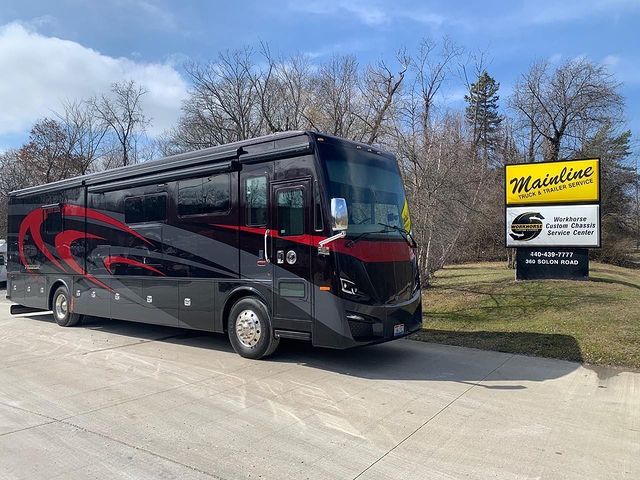
When looking for RV repair shops, one name that emerges above the rest in Cleveland is Mainline RV & Truck Service. Known for our expertise and commitment to quality, we’ve established ourselves as leaders in RV repair. Always make sure to get a quote before proceeding with any repairs, and with a place as reputable as Mainline, you can expect transparency, fairness, and dedication. Contact us today to get a quote or schedule a service.
Trust Our RV Repair Shop
Contact our team at Mainline RV & Truck Service for repairs and maintenance. Book with us today!
Contact Us